
Community Life:
How did Meta Fuller contribute to her Framingham community?
Other than being a renowned artist, Meta Fuller was also a force within her Framingham community. When she and Solomon moved to Framingham in 1909, they were one of the first Black families to settle the town. From then until her death in 1968, Meta and her husband overcame racism and used their home to host gatherings with influential Black members around the Boston metropolitan area. In addition, Meta applied her artistic talent to creating props and costumes and doing makeup for Framingham's Civic League theater. Just as she employed her art as activism in her career, Meta also involved herself in local activist organizations like the Women's Club.
Framingham Before the Fullers
At the turn of the 20th century, Black settlers represented a small portion of the Framingham population. Framingham reflected the same racist sentiment that was systematically impacting communities across the United States. Namely, the town's inhabitants regularly played into racist stereotypes surrounding African Americans; in the town's 1900 Bicentennial parade, a published description of the celebration recounted how a coal dealer exhibited a group of Black musicians “playing and singing real coon songs, to the delight of everyone.”
If this wasn't bad enough, the Elmwood Opera House, and later, the Gorman Theater frequently showed blackface minstrel shows. The popularity of this offensive form of entertainment reveals the degree to which the town may was unwelcoming to people of color.
First Impressions
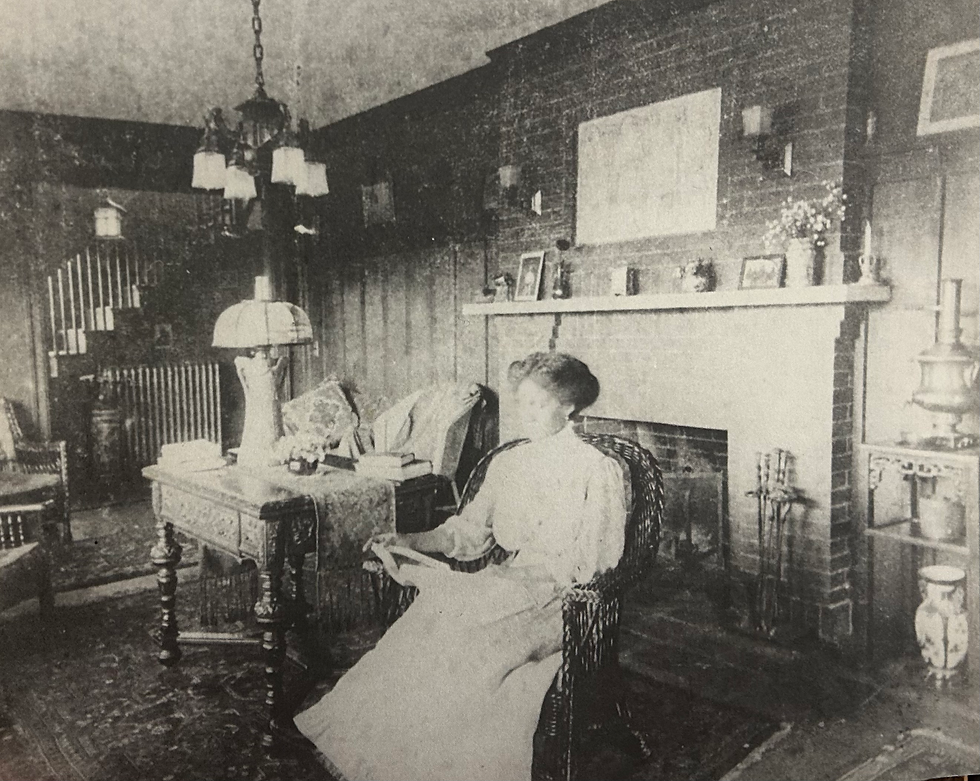
By the time Meta and Solomon arrived in Framingham in 1909, Framingham residents were still largely inhospitable to African American residents. Some accounts of their first impressions of the town suggest that a petition was passed around the town's white residents as an effort to compel the Fullers to move out. As David Fuller, one of the Fullers' grandsons, recounts, the town's residents sent a representative to visit their house on Warren Road with the same goal in mind. However, after the representative learned about the couple's education and careers, he instructed the residents to cease their complaints. Eventually, resistance against Meta and Solomon further subsided after they got involved in the local church and organizations.
Meta Fuller reading in her Framingham home
Framingham History Center
Churches and Pageants
At the same time, Meta grew her reputation for making props for her local church. The artist was well known across Framingham for her "living pictures," impressive recreations of famous paintings such as "The Mona Lisa" and "The Blue Boy," which she sold to raise funds for the St. Andrew's Episcopal Church.
With the same living pictures, Meta also provided props and wardrobes for local pageants such as By the Breadth of a Hair, which featured the story of Jesus Christ. According to Betty Dudley on the Framingham Women's Club Bulletin, "[a]lmost every organization in town sought Meta out when they were producing a play or a pageant."
Involvement in the Civic League
Meta applied her creative talent in the fine arts world to the local theater. During her time as the only African American volunteering for the Civic League during the 1920s and 1930s, Meta held a range of jobs. She appears in the programs for productions like Skidding (1935) and The Bishop Misbehaves (1936) as a stage artist and makeup artist. In addition, although not listed in the programs, Meta also created props and costumes for several productions.
At one point, as Dorothy Larnard and Solomon Fuller Jr. mentioned in a 1988 interview, Meta equally divided her time between volunteering for the local theater and making sculptures. The artist's son, Solomon Jr., recalled how "cluttered" their family home was with Meta's creations.
Meta also contributed to the Allied Arts Theater Group (AATG) in Boston, an African American theater company her friend founded in 1927. After balancing her work between the two organizations, Meta eventually stopped volunteering for both after her friend died and Solomon became ill in the mid-1940s.

Meta Fuller (third from the left) at a Women's Club reception
Framingham History Center
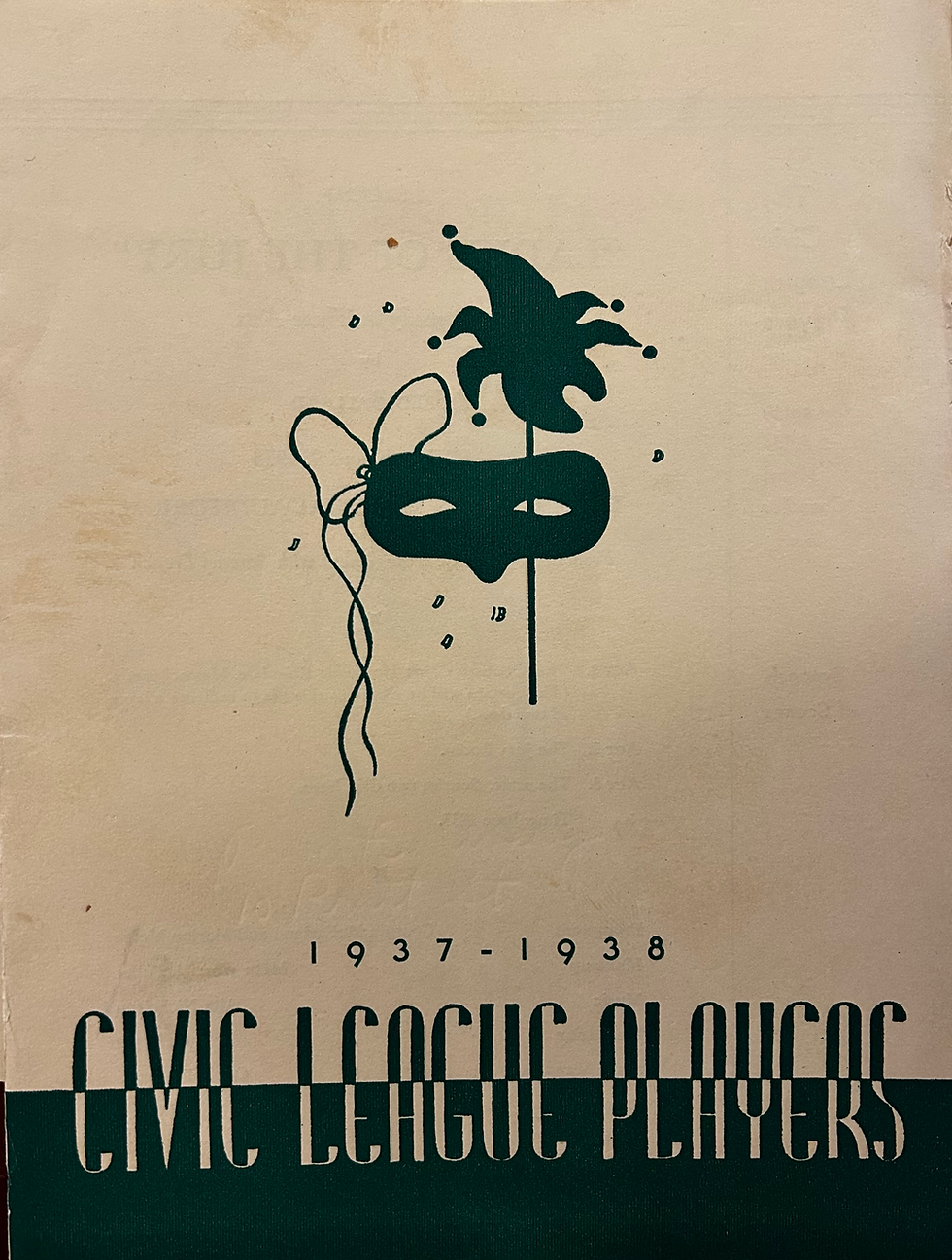
Program cover for Civic League Players 1937-1938 performances
Framingham History Center
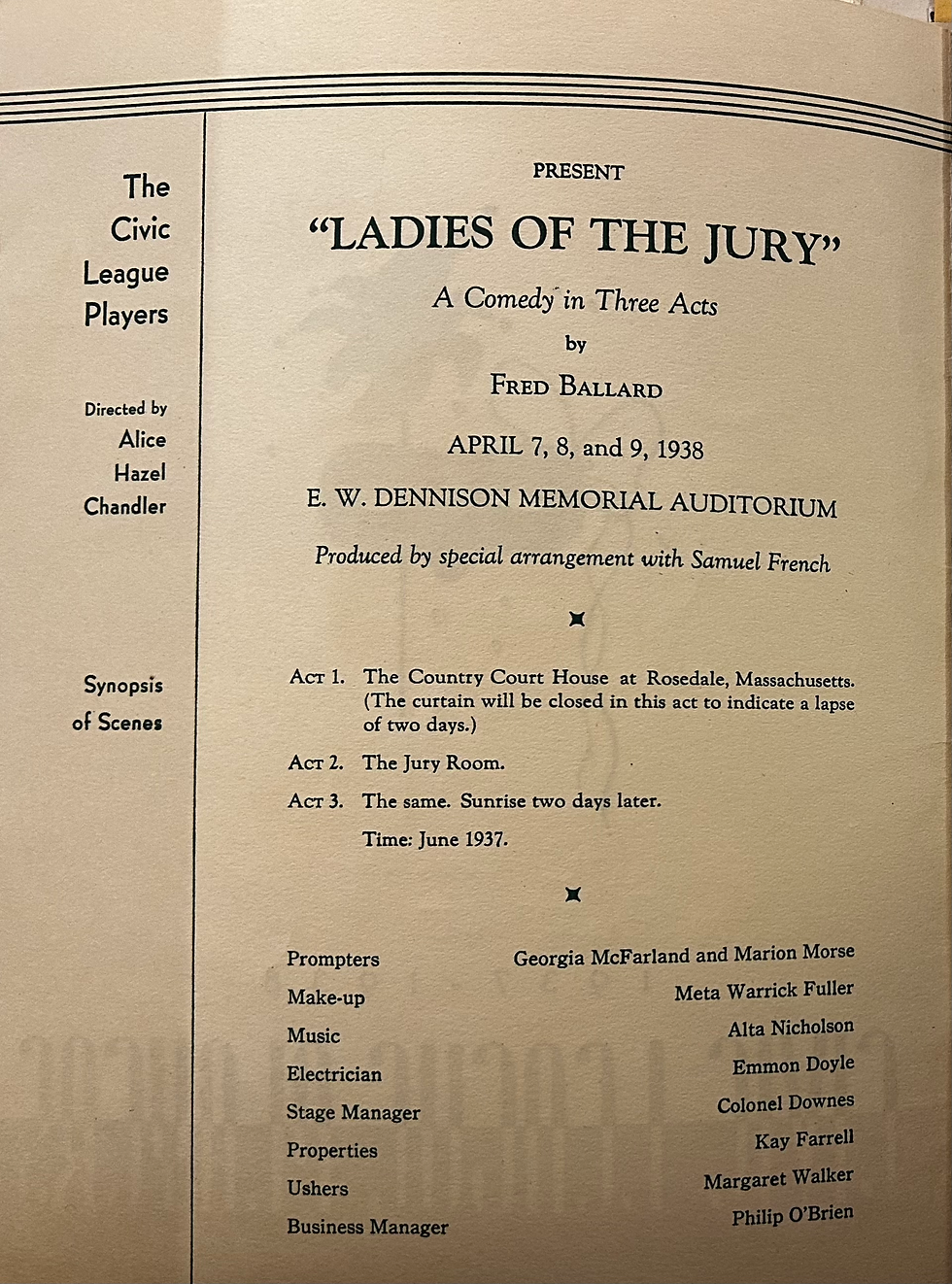
List of production team members for the 1938 play Ladies of the Jury
Framingham History Center
David Fuller on Meta's interactions with and contributions to her Framingham community
Meta's grandson, David Fuller, explains how Meta and Solomon dealt with the struggles of being one of the first black families to settle in Framingham and remarks on how the artist contributed to the town.
Gallery of costumes and props made by Meta Fuller for the Civic League ca. 1920-1930
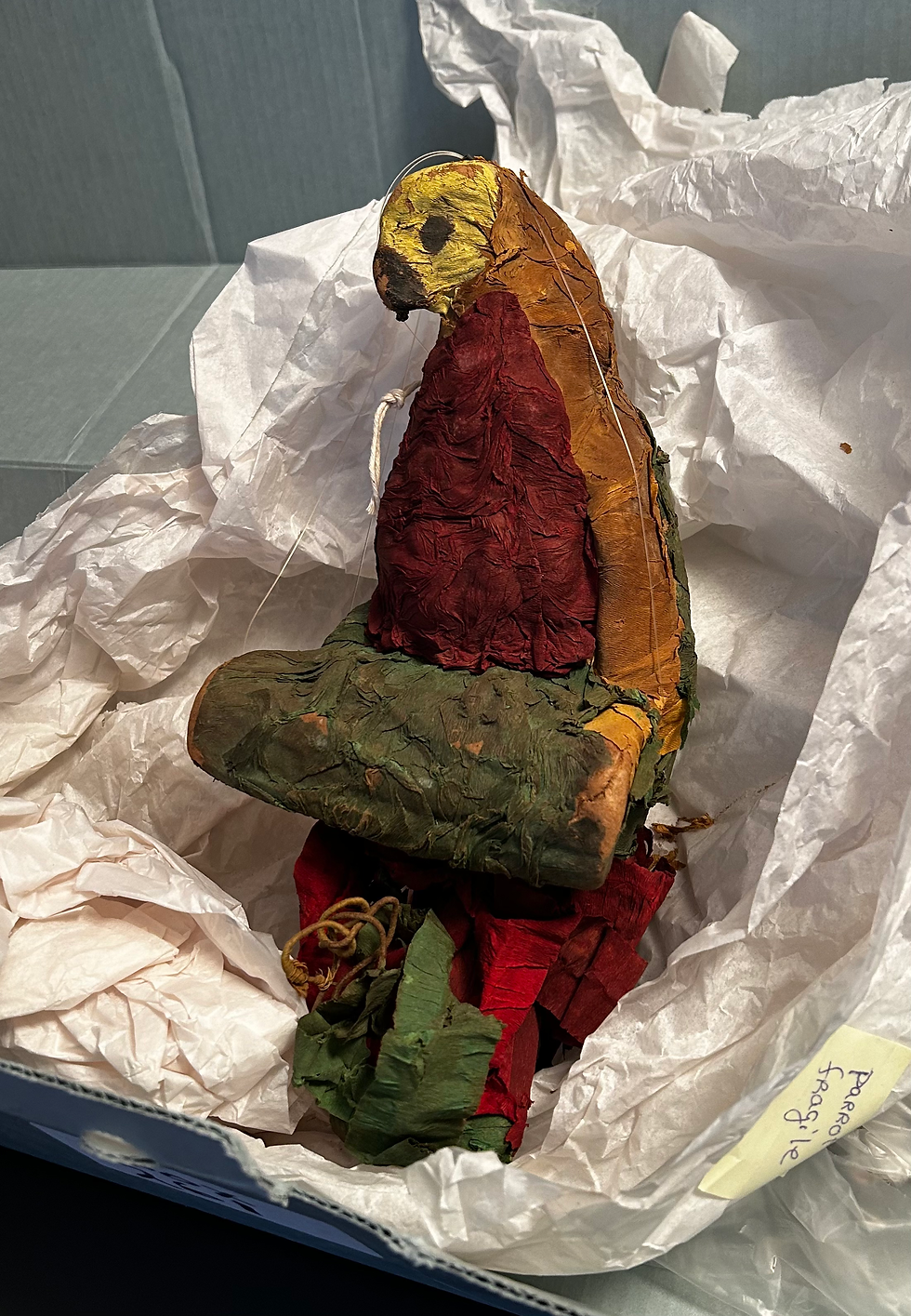


Prop, paper mached parrot
Prop, paper mached mask
List of Civic League sponsors 1934-1935


Meta's husband, Dr. Solomon Fuller, listed as a sponsor


Garment bag used to hold dresses made for Civic League
Prop, wooden sword
Prop, paper mached dove


Costume, red dress
Costume, embroidered white dress


Meta Fuller, listed for doing Mr. Buck's makeup
Prop, wooden staff
Prop, wooden lyre
Costume, beige dress
Program for the production Arsenic and Old Lace
Sources
Interview with David Fuller
Herring, Stephen W. Framingham: An American Town. Framingham: Framingham Historical Society, 2000.
Perkins, Kathy A. “The Genius of Meta Warrick Fuller.” Black American Literature Forum 24, no. 1 (1990): 65–72. https://doi.org/10.2307/2904066.
Hoover, Velma J. “META VAUX WARRICK FULLER: HER LIFE AND HER ART.” Negro History Bulletin 40, no. 2 (1977): 678–81. http://www.jstor.org/stable/44176711.
Framingham History Center Archives
Image Credits
Framingham History Center Archives